 Budnick Converting ®
Learning Center
At Budnick, we're focused on making sure you have the knowledge base you need to make the right decisions for your projects.

One of the biggest missteps you can make in your adhesive selection process is assuming that all tapes are the same - which is why we're here to help you understand the differences.

Keep up to date on news and articles directly impacting your industry, adhesive advances, and learning opportunities for expanding your knowledge base.
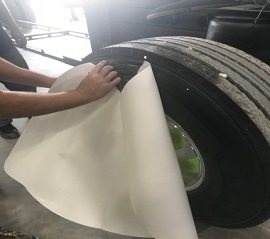
Take a look at some of our case studies where we have enhanced production efficiencies and created cost-efficient solutions for a variety of industries

Budnick's Sourcing Guides serve as valuable resources for finding the appropriate adhesive tapes, foams, films, and other flexible materials tailored to specific industry needs and applications.
Download the eBook

One of the biggest missteps you can make in your adhesive selection process is assuming that all tapes are the same. So much goes into whether an adhesive will work for your particular application, and you should consider each factor when picking out an ideal product. It's important to match the properties of your adhesive to the needs of what you're bonding.
At Budnick.com we've always made it our primary goal to educate our customers as best we can, and our Tape101 eBook and learning center is the next step in that process. We've outlined the basic steps to follow and questions to ask throughout the process of identifying an adhesive so you can approach each project with the knowledge you need to make the best decisions. Feel free to browse through the basics of tapes, or for a more in-depth overview, download our free eBook here!
Case Studies

Case Study Custom Printing
Budnick's flexographic printing capabilities were put to the test to create custom printed container seals for a leading packaging manufacturer.
- The seals feature Budnick’s ability to combine static flexo printed images with variable printed data
- Lot numbers were printed in both barcode and human readable for on four labels
- The labels’ adhesive system sticks to multiple surfaces and includes a tamper evident security feature
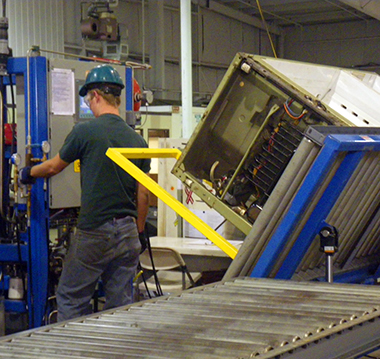
Case Study Converting Experts
Exposed adhesive on a die-cut acting as a hole cover was causing issues on the production floor for this major appliance manufacturer.
- Die-cut was used for whole covering on a refrigerator
- Exposed adhesive was causing plant rollers to become gummed up
- Bullnose die-cutting capabilities allowed Budnick to design an entire new die-cut
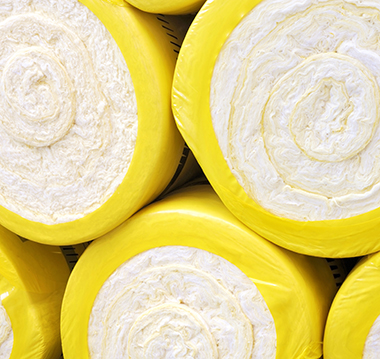
Case Study Environmental
A building materials manufacturer came to Budnick after experiencing failure with a tape they were using on their fiberglass insulation line.
- Used in a flying splice application, it needed to perform in extreme temperatures
- A double coated PET tape was found to work well in both winter and summer months
- A die-cut tab was supplied to the customer to better support the splice